
Is SEO Dead in 2026?
Every few years, marketers declare “SEO is dead.”
And yet… billions of searches still happen every single day.
So what’s actually going on? Is SEO truly dying, or are people just failing to keep up?
Let’s break it down with real data, industry studies, and sharp analysis, not opinions.
Table of Contents
The Short Answer
No, SEO is not dead, your strategy might have.
The version of SEO most people learned 5–10 years ago?
That version is gone. It is transforming at an unprecedented pace.
Every single major metric shows that search and organic search specifically, is not just alive, it is growing.
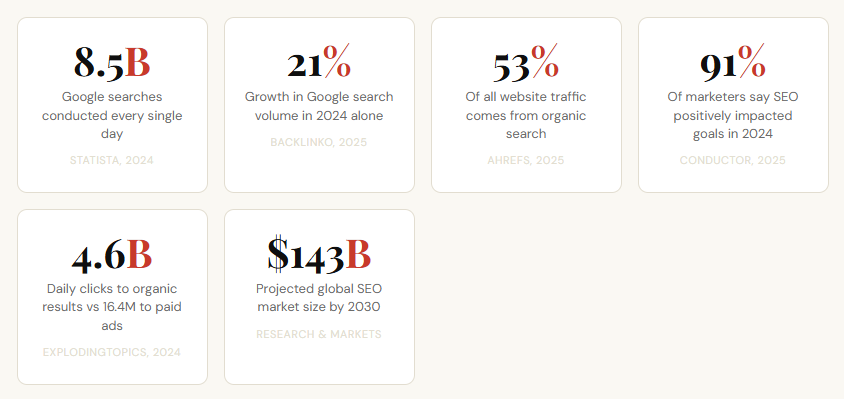
That last number deserves repetition. On a single day in late 2024, Google’s organic results received 4.6 billion clicks while paid ads received just 16.4 million. Organic search is not shrinking, it is overwhelmingly dominant as a traffic channel.
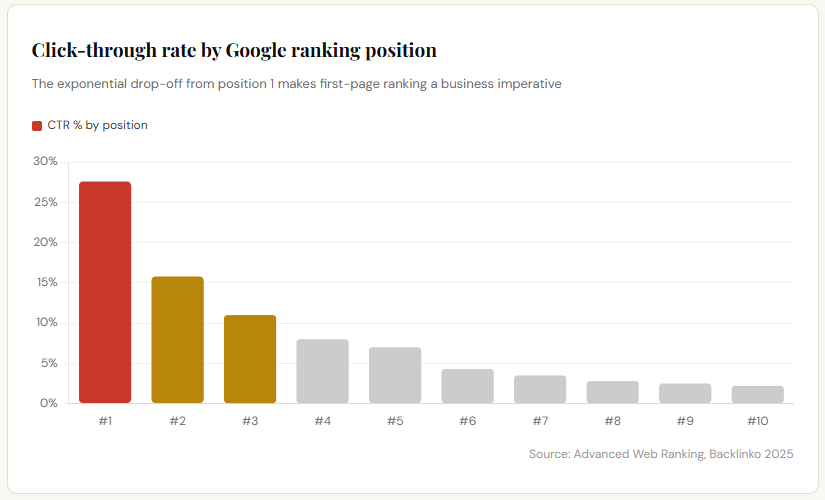
What is actually changing (and it’s significant)
Admitting SEO isn’t dead isn’t the same as pretending nothing has changed. The landscape is shifting in real and measurable ways. Understanding the distinction is everything.
Zero-click searches are rising
This is the most concrete threat to traditional traffic models. When Google answers a question inside the SERP itself , via a featured snippet, an AI Overview, or a People Also Ask box, users no longer need to click through to your site. So yes, visibility is still there, but traffic is being filtered.
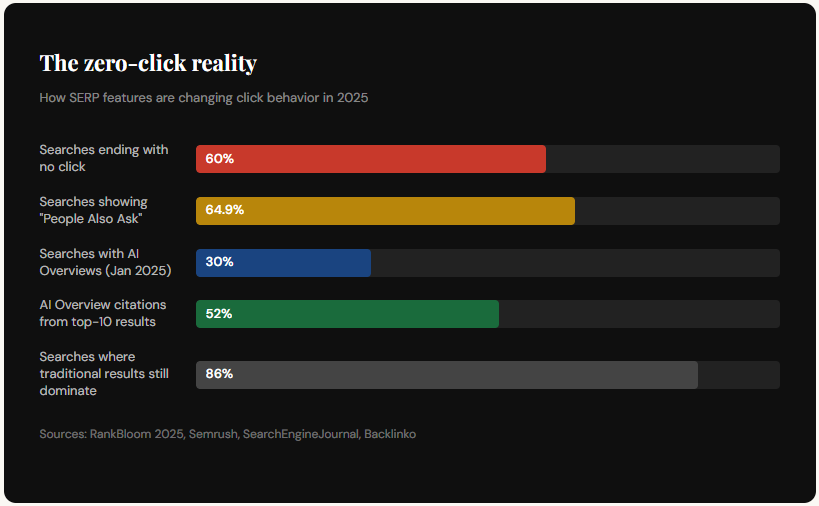
The key nuance: AI Overviews appear in just 13% of all searches as of mid-2025, and they are concentrated in informational, top-of-funnel queries. Commercial, transactional, and local searches, the ones that actually convert, remain largely unaffected by AI-generated answers.
Earlier:
- 100 people searched
- Maybe 40–50 clicked websites
Now:
- 100 people search
- Only 20–30 click
👉 The rest get answers directly on Google
So:
- Visibility = still high (people see your content)
- Traffic = lower (fewer people visit your site)
Why This Matters for You
This changes how SEO works.
Old SEO Thinking: “Rank #1 = tons of traffic”
New Reality: “Rank #1 = visibility… but not guaranteed clicks”
But Here’s the Important Part (Most People Miss This)
Zero-click doesn’t mean useless. It can still give you:
- Brand Exposure: People see your name again and again → Builds trust
- Authority: If your content appears in featured snippets and AI summaries, you become the source of truth
- Better Quality Traffic: People who DO click are more serious and more likely to convert.a
The LLM threat is overstated
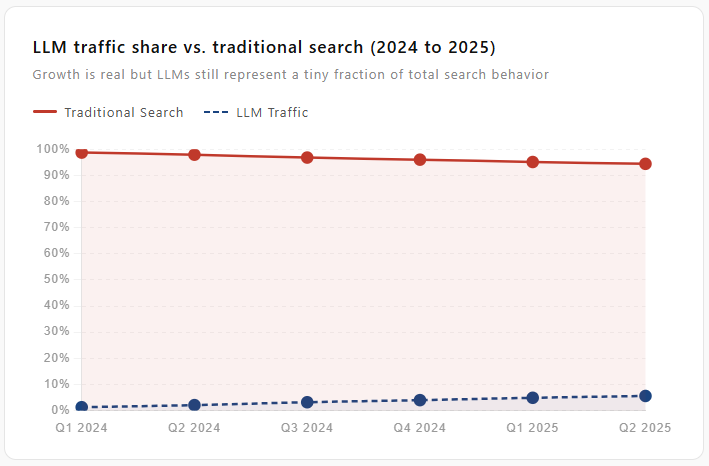
ChatGPT, Perplexity, and other LLMs are genuinely drawing time and attention. But the data tells a sobering story for those declaring search’s death: LLMs currently account for just 5.6% of all search behavior, up from 1.3% in early 2024. And Semrush data shows that only 30% of ChatGPT prompts resemble how people actually use search engines. People use LLMs for drafting, brainstorming, and conversation, not primarily for finding a local plumber or comparing product prices.
SEO is no longer just “ranking on Google.”
It’s now a combination of:
Search Everywhere Optimization
You’re optimizing for:
- YouTube
- TikTok search
- AI tools
Search is no longer one platform.
What’s Actually Dead (Old Tactics That No Longer Work)
Techniques like content copying, keyword stuffing, and acquiring low-quality backlinks are not just outdated, they can now actively harm your website.
New Strategies That Work in 2026
1. GEO — Generative Engine Optimization Ranking #1 is no longer the only goal. Now you have to create content in a way that AI tools like ChatGPT, Google Gemini, and Perplexity AI can easily understand, use, and include in their answers. Instead of just trying to rank on search engines, focus on making your content clear, accurate, and well-structured so AI chooses it as a trusted source.
E-E-A-T Content (Experience, Expertise, Authority, Trust) Google still favors content written with real insight and expertise. Use AI to streamline drafts, but invest in human editing and strategic direction. Search engines are punishing low-effort content that’s just trying to rank without offering genuine value.
The “Barbell Strategy” The winning approach focuses energy on two extremes: pure utility content (clear, structured, factual, AI-friendly) AND pure human content (personal experiences, unique insights, authentic voices AI can’t replicate). The middle ground, generic, bland content is disappearing.
Q&A / Conversational Content Structure content with Q&A-style headings that mirror how people naturally search. Use conversational, long-tail keywords, for example, instead of targeting “leaky pipe repair,” use “How do I fix a leaky pipe without replacing it?” to align with AI-driven results.
Topic Clusters + Schema Markup Successful SEO strategies now include topic clusters that establish authority across key themes, and schema markup that helps AI and search engines better interpret your content.
Search Everywhere Optimization Platforms like TikTok, Amazon, and generative AI tools like ChatGPT are becoming major players in the search game. Optimize your presence across all these platforms, not just Google
Video-First Content Google’s AI increasingly favors video results, and consistent inclusion in reputable listicle posts can lead to your brand being featured in Google’s AI-generated output, significantly boosting trust and leads
If you want results today build topical authority, don’t just write random posts. Own a niche completely. Instead of writing many weak pages just to exist,
focus on building fewer pages that fully dominate the topic.
Final Verdict
SEO is not dead. It is harder, smarter, and more competitive than ever. The old shortcuts are gone. What remains is the fundamental value proposition that never changed: if people are searching for something you offer, you want to be found.
What died is lazy SEO. Keyword stuffing. Thin content. Irrelevant backlinks. Mass-produced AI articles with no editorial judgment. Google did not kill SEO, it killed bad SEO. And it will keep doing so.
The 8.5 billion daily searches aren’t going anywhere. The question is only who will rank for them.
Frequently Asked Questions(FAQs)
Should I optimize for platforms other than Google?
Absolutely. Search behavior has fragmented across platforms, people search for products on Amazon, tutorials on YouTube, honest reviews on Reddit, and quick answers on AI chatbots. A modern SEO strategy means optimizing your presence across all these platforms, not just Google, to reach your audience wherever they are actually searching.
Why is SEO traffic decreasing for some websites?
Traffic is dropping for some sites due to factors like AI-generated answers, zero-click searches, and frequent algorithm updates by Google. Many users now get answers directly on the search results page, which reduces clicks but not necessarily visibility.
What is a zero-click search and how does it affect SEO?
A zero-click search happens when users find the information they need directly on the search results page without visiting a website. While this can reduce traffic, it increases brand visibility and positions your content as a trusted source.
What is the biggest mistake people make in SEO today?
The biggest mistake is focusing on quantity over quality. Publishing large amounts of shallow content no longer works. Instead, creating fewer but more comprehensive and valuable articles leads to better rankings and long-term results.